A company that cares about the environment
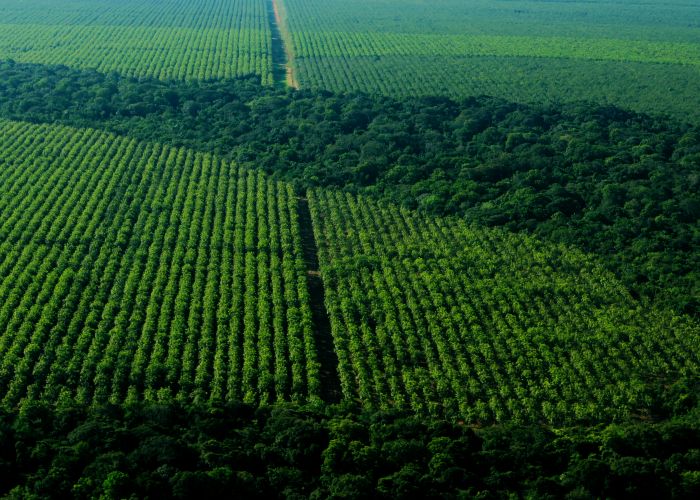
At Mavalle we coexist in harmony with the environment. The natural rubber (Hevea brasiliensis) forests of Mavalle were established on unproductive savannah soils located in the Puerto Lopez – Puerto Gaitan corridor, in the Department of Meta, Colombia.
The establishment of these forests has generated a wide range of environmental benefits for the region.
Environmental impact


The planting of more than 5,550,000 trees in the more than 10,000 hectares of natural rubber forests, coupled with the logging ban and forest compensation with native trees, have greatly contributed to reducing the pressure on the forests of the region.
Likewise, these more than 5 million trees have had a significant impact on the mitigation of climate change, due to their capacity to capture and retain atmospheric carbon dioxide (CO2), a greenhouse gas (GHG). This has allowed us to generate more than 480,000 carbon credits.
Furthermore, with water being an essential resource for the development of the agro-industrial activity in Mavalle, we work for its conservation through the preservation of the vegetal layer of the water basin, the capture of rainwater for agro-industrial work, the restricted use of the resource in the dry seasons of the year and the implementation of the efficient use and saving of water program (PUEAA for its Spanish acronym).
Additionally, in order to compensate for our use of surface water and groundwater and to contribute to the improvement of the hydrogeological cycle, we have planted more than 23,000 trees of native species, in about 21 hectares of soil along the Meta River.
Our natural rubber forests, combined with the native forests, serve as habitat and shelter for a wide range of wildlife species such as the capybara, the leopard, the capuchin monkey, the morrocoy turtle, the charapa turtle, the white-tailed deer and the palm bear, the latter being an important pest controller in our plantations.
Thanks to the projects to determine the population density and biomass of the palm bear and the white-tailed deer, today we know that in the Mavalle forests there are more than 63 bears and 4,500 deer roaming freely and peacefully. Based on this and other information gathered in the development of the project, the implementation of a control, monitoring and awareness strategy has been proposed, in order to reduce the conflict that exists between the presence of these species and the productive systems of the rubber plantations.
Moreover, to ensure the protection of our production and natural forests, as well as the fauna living in them, in the event of forest fires, the corporate social responsibility, welfare and environmental areas of Mavalle, together with the public entities of the region, carry out awareness campaigns directed both to our employees and to the surrounding communities, so that they know how to prevent this type of situation and in the event that one arises, they know how to react in a quick and timely manner, thus reducing the probability of occurrence and the impact of the fires, preventing them from reaching disaster or calamity levels.
Likewise, the Plan aims to optimize inter-institutional management mechanisms, at a local and regional level, in order to improve the response capacity of the entities responsible for the prevention, control, extinction, mitigation and settlement of forest fires.